How NRIs Can File Income Tax Returns in India: Step-by-Step
ITR forms, taxable income, DTAA claims, and e-verification from abroad.

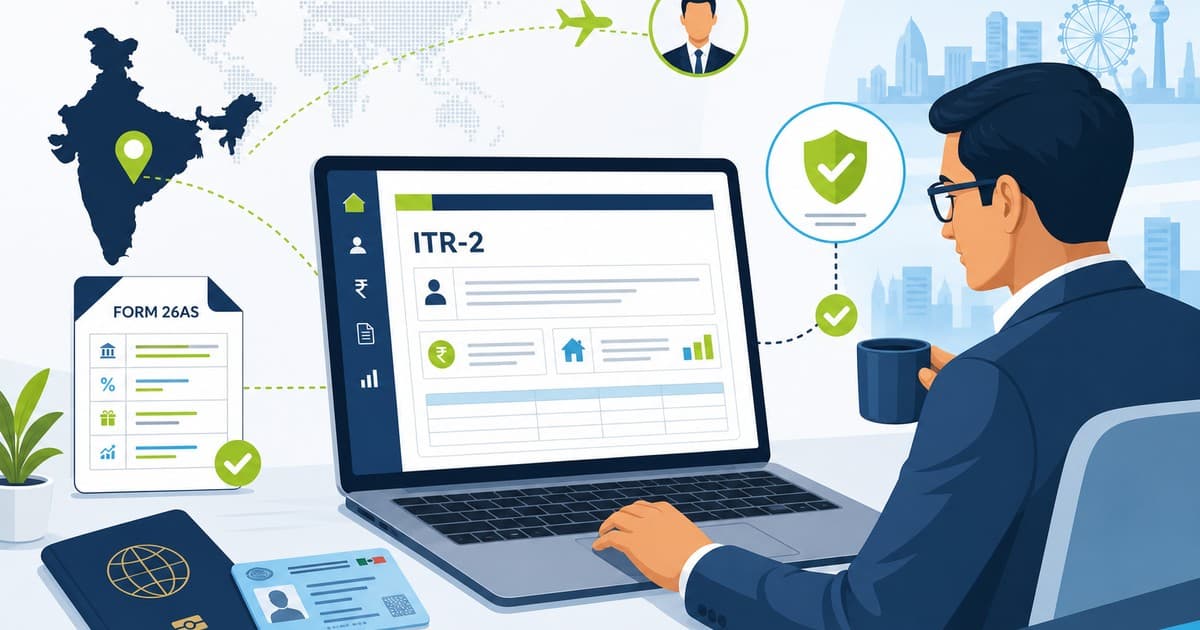
NRIs must file an Indian ITR when India-sourced income exceeds basic exemption limits or when TDS was deducted and a refund is due. Most NRIs use ITR-2 (ITR-3 if they have Indian business income). Filing is online via the Income Tax e-filing portal, and the standard due date for FY 2025-26 (AY 2026-27) non-audit cases is 31 July 2026.
Confirm your NRI residential status each year
Tax status depends on days spent in India, not passport alone. You are generally non-resident if you spent fewer than 182 days in India in the financial year, subject to additional look-back rules for high India-sourced income. Status can change if travel patterns change.
What income is taxable in India for NRIs
India taxes salary for services performed in India, rental income, capital gains on Indian assets, NRO interest, and Indian dividends. NRE and FCNR interest is exempt. Foreign salary and foreign investment gains are not taxed in India.
Choose the correct ITR form
ITR-2 covers most NRI situations including salary, rent, capital gains, and DTAA claims. ITR-3 is required for Indian business or professional income. ITR-1 and ITR-4 are resident-only forms and are not valid for NRIs.
Claim DTAA benefits and e-verify from abroad
Use a Tax Residency Certificate, Form 10F, and Schedule TR to claim treaty relief. File on the e-filing portal, reconcile Form 26AS/AIS, pay any balance tax, and e-verify via Indian net banking, DSC, or posted ITR-V. An unverified return is treated as not filed.
NRI-specific rules that trip people up
NRIs cannot claim the Section 87A rebate available to residents. Senior-citizen higher exemption limits under the old regime also do not apply to NRIs. Reporting exempt NRE interest unnecessarily and skipping DTAA claims are common and costly mistakes.
Frequently Asked Questions
No. NRE interest is tax-exempt, so that income alone does not create a filing obligation.
Yes. Filing is how you reclaim excess TDS when your actual tax liability is lower.
Yes. Filing and most e-verification routes can be completed online with PAN, OTP-linked contact details, and Indian banking or DSC access.
You can usually file a belated return by 31 December of the assessment year, with late fees and interest on unpaid tax, and possible loss of certain loss carry-forward benefits.
Need professional assistance?
Our qualified partners can advise you directly on corporate taxation, FEMA certifications, and company formations.
This article is written and reviewed by practicing Chartered Accountants of DSS Corp Advisory in Chennai. Information is aligned with the latest Finance Act notifications.